

Saskatoon

1952
210 - 415 Wellman Lane
Saskatoon , Saskatchewan S7T 0J1
Canada
Visit Website
Inception
2017
Operating
Yes
Local Time
07:33AM
Saskatoon

How We Enable Trade & Investment

  • Business Services
  • Conference Facilities
  • Exhibit Facilities/Services
  • Tenant Services
  • Trade Information

About World Trade Center Saskatoon

Saskatoon

World Trade Center Saskatoon is about creating, retaining and expanding jobs, hope and the future by raising the world profile of Saskatoon and the province of Saskatchewan. World Trade Center Saskatoon is designed to simplify doing business on the world scene both in bound and out bound. This is about transformational change. By simplifying partnering with NGO's and the private sector we create a synergy which is so critical to the success of the province.

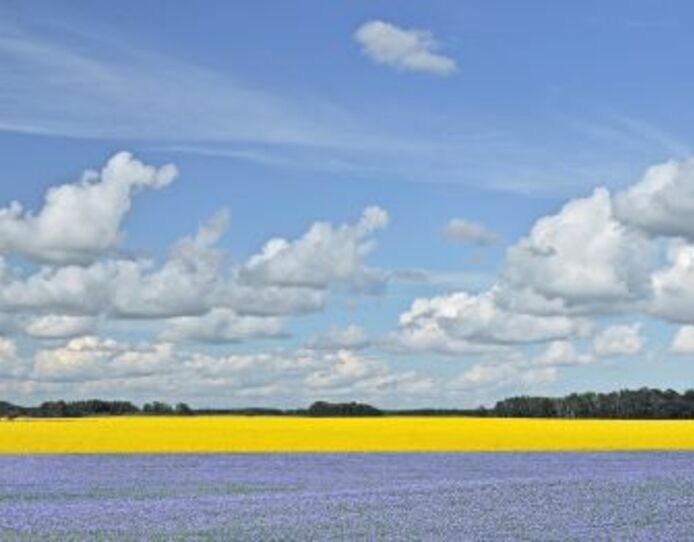
Canola and flax field image Photo credit: Tourism Saskatchewan/Charles Melnick

Benefits

  • Office and real estate services
  • Project consulting services
  • Private equity
  • Convention and trade services
Saskatoon

Local Industries

Technology • Business Management & Professional Services • Financial & Professional Services • Healthcare & Wellness • Information Technology & Software • Hospitality: Tourism & Leisure • Government/Public Services • Metals & Natural Resources • Biotechnology & Bioscience • Agri-Business, Food & Beverage Processing, Animal Husbandry • Athletic & Outdoor • Energy: Utilities & Mining • Advanced Manufacturing • Engineering: R&D: Architecture & Construction • Education & Knowledge Creation

Our Impact

Saskatchewan has a wealth of resources that is the envy of nations - agriculture, potash, uranium and oil.

$13.4 billion - Sales of agrifood products from Saskatchewan
13
Percentage of Canada's total farmland
44%
18.2 Million hectares of culivated farmland in Saskatchewan
18

Team

News

WTC Saskatoon welcomes investment from BHP

May 8, 2024 - Potash is a common name for a group of minerals and chemicals containing potassium. It is a basic nutrient for plants and controls the rate of photosynthesis enabling the movement of nutrients and carbohydrates in plants. Potassium deficiency in plants affects plant growth, root, seed, and fruit development. With ever-growing demands in the food supply and challenges to food security, one can see why potassium matters now and in the future. The province of Saskatchewan (Canada) is home to 50% of the world's reserves of potash and at the current extraction rates, there are roughly 1200 years of potash remaining (give or take a few hundred years). It has been proven location matters and some 400 million years ago this location was a dried-up inland ocean that evaporated – today it helps feed the planet. It would make sense then that BHP (the largest mining company in the world) launched the largest investment they have ever made to develop the world's largest potash company in the world in Saskatchewan. The $18.8B mine will produce 8.5 million tonnes per year, it will employ 5,500 people and production will begin in 2026. The mine is also designed to generate 50% less emissions and 60% less water compared to other potash mines in the world. World Trade Center Saskatoon is based in a smaller Canadian city and when it comes to trade, it punches way above its weight – it is also home to many companies in addition to BHP is also including: Nutrien (the world's largest crop input supplier), K+S (a giant in the German fertilizer market), Mosaic (close by in Regina) as well as several others. As a consumer (regardless of where you live) you are very likely to have benefited from this product. When I think about the World Trade Center Association and its primary objectives, I can not help but think about my region and its contributions to potash/potassium and the hundreds of millions that depend on it. Connecting Businesses, Globally. Read More

Sustainability Vital to International Exporters

January 31, 2024 - ESG frameworks were initially established to help guide investment decisions by focusing a critical lens on a company’s environmental, social, and governance strategies. Increasingly, this lens is shifting to supply chains and international trade. GHG reduction targets and regulations have forced exporters to focus on products and processes that help reduce emissions and provide suppliers the sustainability narrative they need to satisfy customer demand. A recent KPMG survey concluded that 73 per cent of CEOs believe major global challenges like climate change are a threat to their business while 69 per cent of SME leaders expect greater scrutiny. The same survey found that 80 per cent of customers demand that companies should take the lead on global issues. Saskatchewan, a province located in the Canadian prairies, is tackling this issue at the provincial, industry, and commercial levels. And for good reason – the province exports 60 per cent of its Gross Domestic Product. Those products include; crop inputs (including 50% of the world’s potash supply), emission free uranium for power production, dryland farm technology, agrifood products and other manufactured goods tied to these industries. It is rich in critical minerals including; helium, lithium, copper and a host of rare earth elements (naturally occurring in areas with uranium). It is all serviced by a highly efficient transportation system enabling it to reach most countries in the world. In 2022, Saskatchewan exported $53B in products to over 150 countries. Exports grew by 42 per cent. This is in part facilitated by both an export mindset and some effective facilitators in the export development space including Saskatchewan Trade Export Partnership (STEP). To protect existing markets and enhance exporter’s ability to sell into new markets, STEP introduced programming to assist companies in implementing an ESG strategy along with supporting their presence at international show that promote innovation and sustainability such as COP28 which recently concluded in Dubai, UAE. Meanwhile the province has launched the “Sustainable Saskatchewan” brand which highlights many of the province’s economic sustainability and environmental stewardship achievements. There are many examples. For example; when compared to wheat grown in many G7 countries, Saskatchewan has lowest CO2/Kg according to the Global Institute of Food Security – and a growing world population needs this sustainably grown crop. In 2022, Saskatchewan produced over 14Mt of wheat alone. The Food and Agriculture Organization claims there are 3.34 million calories in one tonne of wheat and that each human requires 1600-3000 calories a day to sustain life. At 365 days per year, Saskatchewan’s wheat crop has the potential to feed a population of 65 million or roughly 65 times its population. Wheat is just one crop grown and exported. Saskatchewan is also home to world leading dryland farming technology including zero tillage capable of both moisture conservation and emission reduction but also carbon sequestration as it leaves the soil undisturbed resulting in increased crop production. Dozens of Saskatchewan companies continue to work on breakthroughs in this seeding technique. This technology is being exported through Saskatchewan’s robust ag machinery industry into the US, Asia, Europe, South America, Australia, Africa and Middle East. On the crop input side, Saskatchewan is home to the largest and most sustainable potash industry in the world – and it’s growing. BHP confirmed its intent to build the worlds largest zero emission potash mine. You cannot grow a plant without potash. Nutrien is the largest crop input supplier in the world and headquartered in Saskatoon. This focus on sustainability carries over into energy production. Saskatchewan exported $1B in uranium in 2023. Just one kilo produces 24 million kilowatt hours of zero emission power capable of producing as much energy as burning 400,000 barrels of oil. It is possible that your energy, food, and fuel comes from Saskatchewan (Canada). And it’s our mission to not only be best in the world, but best for the world. World Trade Center Saskatoon is at the heart of it all. Read More

World Trade Center Saskatoon - A Year In Review

April 17, 2023 - The world has witnessed an unjust and unprovoked war in Ukraine that is impacting livelihoods and families, global nutrition needs, costing lives and has had untold damage to property that will take years and reparations to rebuild. All of this on the heals of post COVID inflation, corresponding interest rate fluctuations and supply chain challenges, have all contributed to pain in everything from household budgets to trade balances. Known as “Paris of the Prairies,” Saskatoon, Saskatchewan (Canada) is located at the heart of Canada’s food production system housing 45% of Canada’s arable land, in 2022 it led Canada with a 6.8% economic growth rate and projected to grow again by another 3.6% in 2023 followed by another 2.4% in 2024. The unemployment rate has dropped from 5.6% at the beginning of 2022 to 4.0% today. It remains one of these few places where incomes are strong, housing prices low and quality life is remarkable. It is an economy that addresses basic needs worldwide. Saskatchewan produces and exports almost everything that Ukraine, Belarus and Russia produce at a world scale. There have been disruptions in basic goods including fertilizer, food, and fuel. Saskatchewan is home to 50% of the world supply of potash, 5% of the world’s edible oil, 35% of the world supply of durum wheat, 4% of the world supply of spring wheat, and 5% of the world supply of barley. It is also the fifth largest producer of oil and gas products in North America, is home to 10% of the world supply of uranium but among the purest deposits in the world and one of few places in the world with 23 of 31 critical minerals (including rare earth elements), it is Canada’s sunniest province, has known reserves of geothermal heat and has 11 million hectares of forest. The net result, Saskatchewan has trade demands on it like seldom in its history. 2022 was a standout driving investment like never before with major investment announcements in the agrifood industry, mining industry, forestry industry and energy industry. As we look toward 2023, it appears that it will be more of the same in Saskatchewan. With a land mass twice the size of Japan, nearly the size of Texas and Ukraine and just under three times the size of the United Kingdom, Saskatchewan’s welcoming population comprised of Indigenous, Metis, German, British, Scottish, Irish, Ukrainian, French, Norwegian, Polish, Dutch, Russia, and Swedish ethnicities. Since its inception in 1905 it has welcomed immigrants from every part of the planet. It also enjoys four distinct seasons. The World Trade Center Saskatoon was established to enhance Saskatchewan’s economic future by helping facilitate economic growth. WTC Saskatoon is supported by entrepreneurs who share this goal in the areas of law, logistics, farm input supply, automotive industry, insurance, investment, finance, retail operations, food manufacturing, construction, and commercial development. If you have members seeking profit centers in a stable, affordable jurisdiction, we at WTC Saskatoon would be pleased to discuss the possible. Photo compliments of Tourism Saskatchewan and Nick Biblow. Read More

37th Annual Western Canadian Crop Production Show

January 17, 2020 - SASKATOON, Saskatchewan – The 37th Annual Western Canadian Crop Production Show, held January 13-16, 2020 wrapped up last week. Weather was consistent with winter in January in Saskatchewan and organizers were pleased with the attendance for all 4 days. The information gathered in Saskatoon this week formulates plans for the upcoming growing season for Western Canadian grain producers. “Beginning as an agricultural society; agriculture and farming here in Saskatoon is woven into the fabric of who we are at Prairieland Park,” stated Agriculture Manager, Lori Cates. “This particular show and its growth is a testament to the industry and the producers here in Saskatchewan.” Nearly 17,000 passed through the doors over the 4 days of the show that featured 345 companies utilizing 1067 trade show booths. This show has become Western Canada's premier grain industry showcase by presenting information to producers on the latest technology, services, and products. Organizers would like to extend a huge thank you to our outstanding exhibitors, presenters and dedicated staff that contribute to our show’s success each year. The combined Western Canadian Crop Production Show, Crop Production Week and CropSphere Conference made for another very successful Agricultural Business Awareness Week in Saskatoon. Read More

Contact

Map showing Saskatoon

For more information please complete the form